

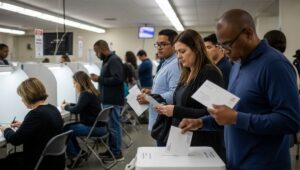
As the 2026 midterm elections draw closer, a quiet storm is gathering at the heart of American democracy. While the nation grapples with foreign conflicts and economic uncertainty, a new battleground has emerged at home: the ballot box itself.
President Trump’s latest executive order seeks to sharply restrict both mail-in ballots and the use of electronic voting machines—two cornerstones of modern elections. Framed as a push for “election integrity,” the move has ignited intense debate, exposing the deep fault lines that define America’s political landscape.
Supporters of the order argue that mail-in ballots are vulnerable to fraud and that voting machines lack transparency. They believe these measures will restore public trust in elections, ensuring that every ballot counted is beyond reproach. Critics, however, see a more troubling picture. By undermining accessible voting methods, they argue, the administration risks silencing millions of Americans—particularly those who rely on absentee voting, from military families overseas to elderly citizens unable to reach polling stations.
The decision also carries echoes of past political fights. In 2020, mail-in voting became the centerpiece of a fierce national argument, with Trump repeatedly questioning its legitimacy despite a lack of evidence of widespread fraud. Now, five years later, the stakes are even higher. Civil rights groups warn that limiting these options could reshape the electorate itself, tilting the scales of democracy long before voters even cast their ballots.
Beyond the logistics, the larger question looms: who gets to decide how Americans vote? In a federal system where states traditionally control election procedures, the executive branch’s growing involvement raises constitutional concerns. Legal scholars suggest the matter may soon head to the Supreme Court, where the balance between state rights and federal oversight will be tested once again.
But beneath the legal battles and political posturing lies a deeper issue: trust. For democracy to function, citizens must believe not only in the fairness of the outcome but also in the integrity of the process. When the process itself becomes the subject of controversy, faith in the system erodes—leaving the very foundations of democracy vulnerable.
The war over how Americans vote may appear procedural, even technical. But make no mistake: the outcome of this fight could determine not just who wins in 2026, but how democracy in the United States will look for decades to come.

Can you be more specific about the content of your article? After reading it, I still have some doubts. Hope you can help me.
I don’t think the title of your article matches the content lol. Just kidding, mainly because I had some doubts after reading the article. https://accounts.binance.com/ka-GE/register-person?ref=ILE8IH9H