
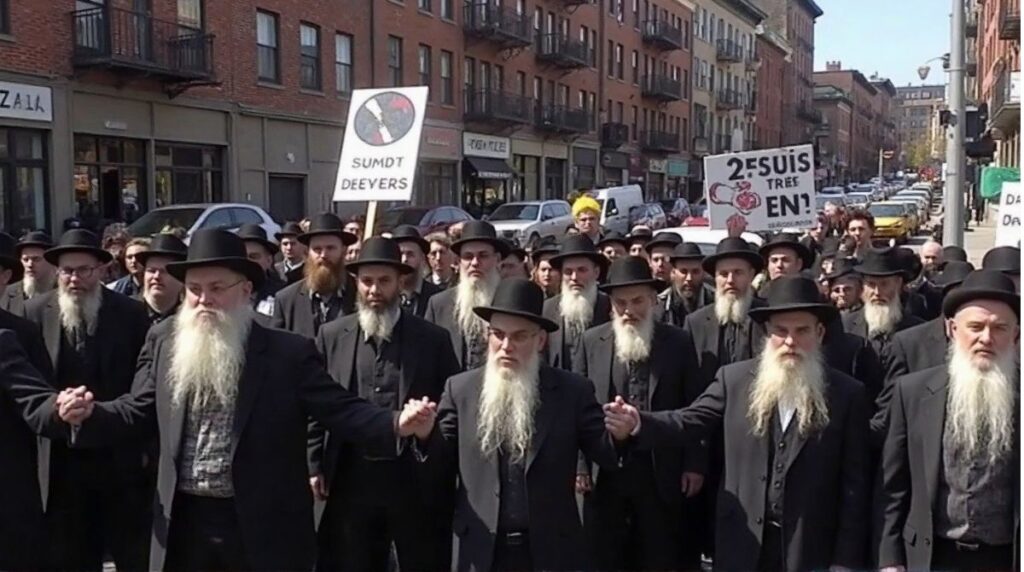
On October 2, 2025, New York City witnessed a powerful scene of faith, politics, and civil disobedience when more than 50 rabbis and pro-peace activists blocked traffic on the Brooklyn Bridge to demand a ceasefire in Gaza. The demonstration, organized by the group “Rabbis for Ceasefire,” sparked widespread debate and led to dozens of arrests by the NYPD.
Exclusive Offer for Our Readers!
Discover an amazing deal available only for our audience. Don’t miss out—act now!
A Dramatic Protest on the Brooklyn Bridge
For nearly an hour, traffic in both directions across the iconic Brooklyn Bridge came to a standstill as rabbis in prayer shawls and their supporters sat in the roadway, chanting and holding signs calling for an immediate ceasefire in the ongoing conflict between Israel and Hamas.
Protesters unfurled banners with messages such as “Not in Our Name” and “Ceasefire Now”, emphasizing that their faith compels them to stand against violence and advocate for peace.
Witnesses described a surreal sight: rabbis kneeling on the asphalt, reading passages from sacred texts, while commuters honked their horns and police officers surrounded the group.
Why the Rabbis Took to the Streets
The group “Rabbis for Ceasefire” has grown in visibility over the past year, bringing together Jewish religious leaders who believe their moral obligation extends to opposing military escalation in Gaza.
“We cannot remain silent while innocent lives are lost. Our tradition teaches us the value of every human life, and that means speaking out — even if it means risking arrest,” said Rabbi Miriam Cohen, one of the protest leaders.
Their message was clear: being Jewish and supporting Israel’s right to exist does not require endorsing continuous warfare. Instead, they argue, it demands a commitment to justice, compassion, and coexistence.
Exclusive Offer for Our Readers!
Discover an amazing deal available only for our audience. Don’t miss out—act now!
Police Response and Arrests
The NYPD moved in after repeated warnings, arresting dozens of protesters for disorderly conduct and obstructing traffic. Officers used plastic zip-tie handcuffs and escorted rabbis and activists to waiting buses, drawing cheers from supporters and frustration from stranded drivers.
Police later confirmed that around 50 individuals were taken into custody but stressed that the protest remained largely peaceful, with no injuries reported.
Public Reactions: Support and Criticism
The demonstration sparked mixed reactions across New York and beyond.
- Supporters praised the rabbis for taking a moral stand, calling their civil disobedience a courageous act of conscience. Many social media users shared videos of the protest, framing it as an example of “faith in action.”
- Critics, however, argued that blocking a major thoroughfare like the Brooklyn Bridge was disruptive and unfair to ordinary commuters. Some accused the group of being politically naive or one-sided in their approach to the complex conflict in the Middle East.
Despite the criticism, the protest succeeded in drawing national media coverage and fueling discussion about U.S. policy toward Gaza.
The Larger Context
The protest comes amid a new wave of violence in Gaza, where casualties continue to mount on both sides. The United States has faced growing pressure, both domestically and internationally, to call for a ceasefire.
Jewish communities in America remain divided over the issue, with some strongly supporting Israel’s military actions and others — like Rabbis for Ceasefire — advocating for a humanitarian approach that prioritizes diplomacy and civilian protection.
Political analysts suggest that such visible demonstrations from faith leaders could influence how Americans perceive the conflict, especially in a city like New York, which is home to the largest Jewish population outside of Israel.
Exclusive Offer for Our Readers!
Discover an amazing deal available only for our audience. Don’t miss out—act now!
A Message Beyond Brooklyn
For the rabbis involved, the protest was not just about Gaza or even U.S. foreign policy — it was about living up to their values.
“Our role as religious leaders is to remind people that peace is always possible,” Rabbi Cohen said as she was escorted away by police. “We may not have power in Congress, but we have the power of moral witness, and that matters.”
Whether or not their message changes policy, the images of rabbis being handcuffed on the Brooklyn Bridge are likely to remain a powerful symbol in the ongoing debate over war, peace, and faith in the public square.
The “Rabbis for Ceasefire” protest on the Brooklyn Bridge highlights the growing role of religious voices in debates about U.S. foreign policy and Middle East conflict. While controversial, the demonstration succeeded in sparking dialogue and forcing New Yorkers — and the nation — to confront tough questions about justice, morality, and the true meaning of security.
For some, the traffic jams were a nuisance. For others, they were a reminder that conscience sometimes requires disruption.
Sources / References:
- New York Post – Rabbis for Ceasefire Protest
- BBC News – Coverage of Gaza-related protests in NYC
- AP News – New York City Protests