
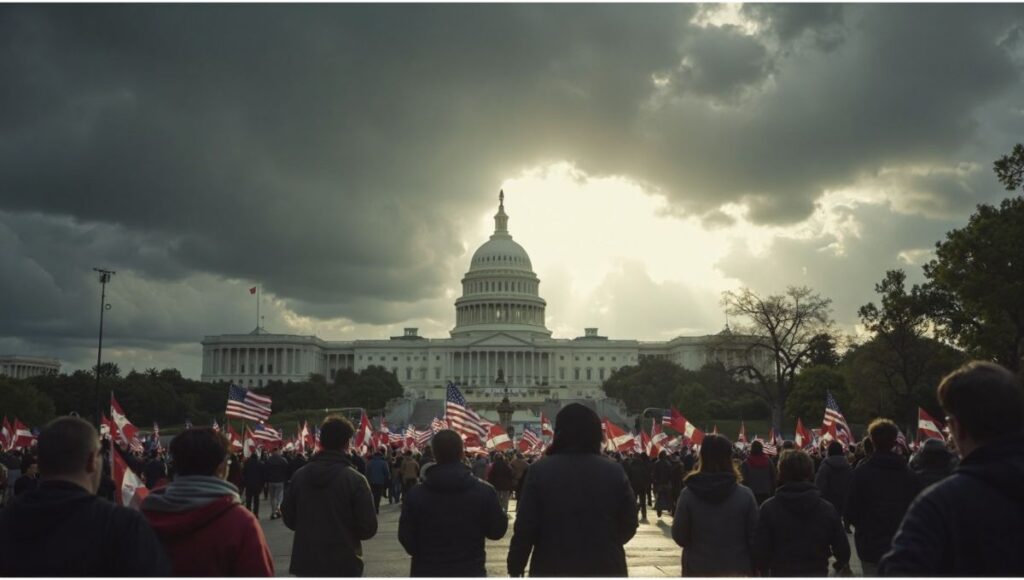
The United States once again finds itself on the brink of a government shutdown, a recurring crisis that highlights deep divisions in American politics. As Congress returns from its recess, the September 30 funding deadline looms large, with little consensus in sight. The stakes are high: federal workers, essential services, and the broader economy could all feel the immediate effects of a shutdown. But beyond the deadlines and negotiations, this standoff reflects a broader struggle over the future direction of the country.
The Political Deadlock
The immediate issue centers on government funding, but the underlying battle is much larger. Republicans, emboldened by their slim majority in the House, are pushing for sharp spending cuts and stronger border security measures. Democrats, led by President Trump’s critics in Congress, are calling for a budget that protects social programs, supports healthcare, and invests in climate resilience. Neither side shows much willingness to compromise, making a shutdown increasingly likely.
This political deadlock is not new. Over the past decade, America has seen multiple funding crises, each underscoring how polarized the system has become. Yet this year feels different. The 2025 political calendar, with a presidential election less than 14 months away, gives every decision added weight. Each party is using the budget battle to frame its vision for America’s future—and to score points with voters.
Trump’s Role in the Showdown
President Donald Trump, who returned to office in 2025, has added a new layer of complexity to the negotiations. He has openly threatened to use the federal shutdown as leverage for his policies, including deploying the National Guard in high-crime cities and restricting federal funding for sanctuary states. His aggressive rhetoric has energized his base but further alienated Democrats and some moderate Republicans.
Trump’s strategy reflects his broader approach to governance: disruptive, confrontational, and rooted in constant campaigning. For his supporters, he is standing up against a bloated federal government and entrenched elites. For his opponents, he is undermining institutions and destabilizing democracy. The shutdown fight has become a referendum not just on spending priorities but on Trump’s presidency itself.
The Human Cost of a Shutdown
While politicians trade barbs in Washington, the potential shutdown would hit ordinary Americans the hardest. Hundreds of thousands of federal workers could be furloughed without pay. National parks, museums, and agencies would close their doors. Food assistance programs and housing support could be delayed, impacting vulnerable families. Even sectors like travel and business, which rely on timely federal approvals, could see disruptions.
Past shutdowns have shown that the longer the government remains closed, the greater the economic damage. A prolonged standoff could slow job growth, shake financial markets, and erode public trust in government. For many Americans, the political drama in Washington feels disconnected from their daily struggles with rising costs, healthcare, and housing.
Labor Day Protests: A Symbol of Discontent
The shutdown debate coincides with massive Labor Day protests that swept across more than 900 cities nationwide. Demonstrators called out the growing influence of billionaires and the economic inequality that defines much of modern America. These protests serve as a reminder that public frustration extends far beyond partisan squabbles in Congress. Workers and communities are demanding a government that puts people over profit.
The connection between the protests and the shutdown threat is clear: both highlight a growing distrust in institutions and a sense that the system is rigged in favor of the wealthy and powerful. As politicians dig in, Americans are left wondering who is really being served by the endless brinkmanship.
A Test for American Democracy
This looming crisis is more than a budget fight; it is a test of America’s democratic resilience. Can the nation’s leaders find common ground, or will polarization continue to erode the basic functions of government? With global challenges like climate change, international conflict, and economic competition demanding attention, America cannot afford a government paralyzed by infighting.
Looking ahead, the next few weeks will be crucial. If lawmakers manage to strike a deal, it could signal a rare moment of bipartisanship. If not, the resulting shutdown could deepen cynicism and further weaken trust in political institutions. Either way, the world is watching closely, as America’s political struggles inevitably shape global perceptions of its strength and stability.
Conclusion
The possibility of a government shutdown is not just a political story—it is a human story, an economic story, and a test of values. As Congress debates funding and as the President pushes his agenda, millions of Americans wait anxiously to see whether their leaders will prioritize governance over gamesmanship. In this moment of uncertainty, one truth is clear: the decisions made in Washington over the coming weeks will reverberate far beyond Capitol Hill, shaping the future of the nation for years to come.
📌 Sources:
- The Guardian – Congress returns after recess as threat of government shutdown looms
- The Washington Post – Nationwide Labor Day protests denounce billionaires in Trump’s orbit
- New York Post – Attacks on US churches have risen significantly since 2021