
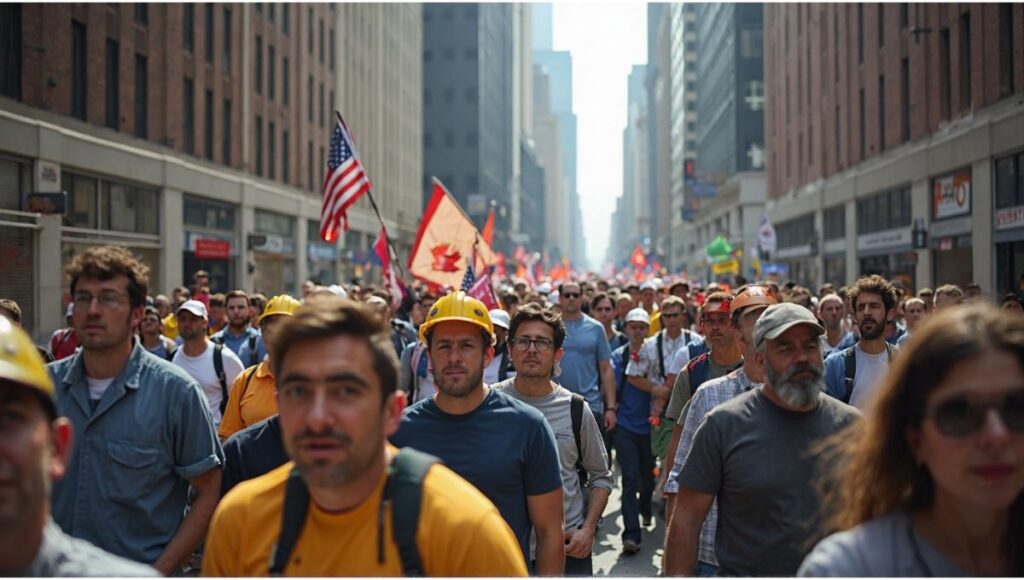
On September 1, 2025, three stories dominated American conversations: President Donald Trump’s vow to mandate voter ID for all elections, the nationwide rhythm of Labor Day closures, and growing concern among economists about political pressure on the Federal Reserve. Together, these headlines capture the intersection of politics, everyday life, and the economy—three forces that shape the nation’s mood.
In this article, we’ll walk through what happened, why it matters, and how it could affect ordinary Americans.
Trump’s Bold Call for Nationwide Voter ID
President Trump once again placed himself at the center of the nation’s political debate. In remarks that quickly spread across U.S. media, he declared his intention to issue an executive order mandating voter ID for every election in the country.
Supporters of the idea argue that voter ID laws are essential to prevent fraud and restore faith in democracy. They point to polling showing that many Americans, across party lines, favor stronger identification requirements at the ballot box.
Critics, however, warn that such a move could suppress turnout, especially among minority groups, students, and low-income voters who may find it harder to obtain official identification. Civil rights organizations are already signaling legal challenges, suggesting that the courts may once again become the stage for America’s most heated political battles.
The proposal reflects Trump’s ongoing influence over U.S. institutions. Even as his supporters cheer, his critics argue that his approach risks undermining trust in democratic norms.
Labor Day 2025: What’s Open and What’s Closed
While politics dominated headlines, millions of Americans were more immediately concerned with a simpler question: what’s open on Labor Day?
This year’s holiday once again highlighted how deeply intertwined national traditions are with consumer habits. According to CBS News reports:
- Banks and the stock market were closed, giving Wall Street a day of rest.
- The U.S. Postal Service suspended deliveries.
- Big-box retailers such as Walmart and Target stayed open, although some adjusted their hours.
- Costco drew attention by rolling out new early-entry hours for Executive members.
- Raising Cane’s, the fast-growing chicken chain, made headlines by closing every single location to give employees the day off—a rare move in fast food.
For ordinary families, the closures were both a disruption and an opportunity. With schools and many offices shut down, families headed outdoors, fired up grills, and marked the unofficial end of summer. The closures reminded Americans that holidays are not only about sales and shopping—they’re also about pausing to celebrate labor and community.
Economists Sound the Alarm Over Fed Independence
Beyond barbecues and retail hours, another story quietly shook financial circles. Economists warned that President Trump’s repeated attacks on the Federal Reserve risk undermining the institution’s independence.
The Financial Times reported that some investors worry markets are underestimating the long-term risks of political interference in monetary policy. If the Fed is pressured into keeping interest rates artificially low or making decisions based on short-term politics, inflation could rise, borrowing costs could fluctuate, and America’s reputation for financial stability could suffer.
For households, this isn’t an abstract debate. The Fed’s decisions directly affect mortgage rates, credit card interest, and even job growth. A loss of independence could mean more economic volatility, making it harder for families to plan for the future.
Why These Stories Matter Together
At first glance, voter ID, holiday closures, and Fed policy may seem like unrelated headlines. But taken together, they reveal the pulse of America in 2025:
- Politics: Questions of democracy and fairness continue to divide the country.
- Daily life: Holidays and traditions remind Americans of their shared culture—even as businesses turn them into economic events.
- Economy: Behind the scenes, financial stability remains fragile, shaped not only by markets but by political decisions.
These three strands—political power, cultural rituals, and economic uncertainty—are deeply interconnected. Policies in Washington ripple down to Main Street, and ordinary routines reflect larger national debates.
Conclusion
September 1, 2025, captured America in a snapshot: a president pushing bold political changes, a nation pausing to celebrate Labor Day, and experts warning of economic turbulence ahead. For readers trying to make sense of the country’s direction, the message is clear: the headlines may shift, but the underlying questions—about democracy, community, and stability—remain as urgent as ever.
As fall begins, Americans will continue to watch how these stories unfold, shaping not only the news cycle but also the choices they make in their daily lives.


Your article helped me a lot, is there any more related content? Thanks!
Thanks for sharing. I read many of your blog posts, cool, your blog is very good. https://www.binance.com/register?ref=IHJUI7TF
Can you be more specific about the content of your article? After reading it, I still have some doubts. Hope you can help me. https://www.binance.info/ro/register?ref=HX1JLA6Z
Can you be more specific about the content of your article? After reading it, I still have some doubts. Hope you can help me.