
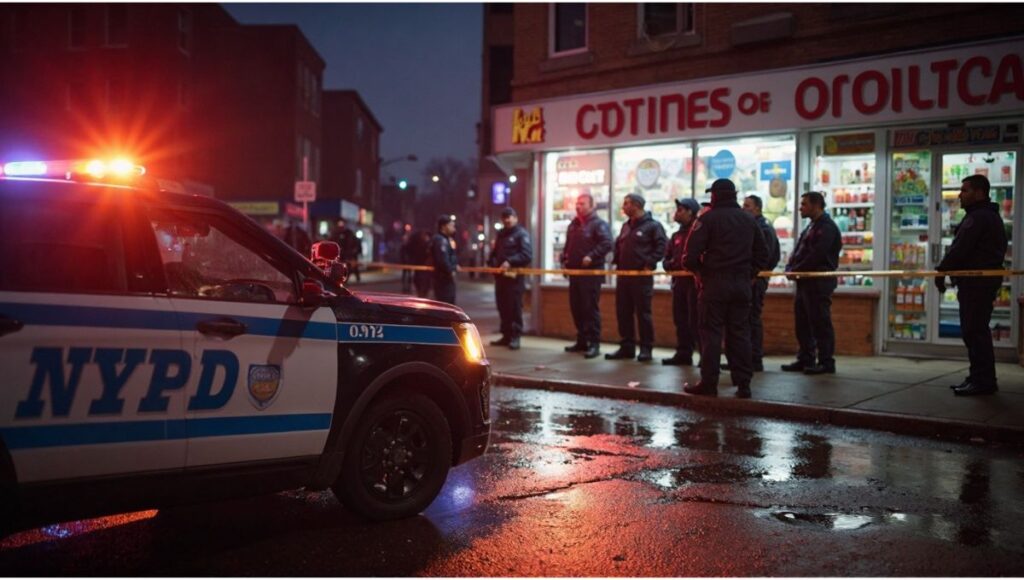

The Bronx, one of New York City’s most storied boroughs, has once again found itself in the national spotlight. A surge of violent incidents, particularly shootings that have shaken entire neighborhoods, has prompted Mayor Eric Adams to make one of his boldest security moves yet: the deployment of 1,000 additional police officers to the streets of the Bronx. While the announcement was delivered as a lifeline to worried residents, it has sparked debate across the city and the nation.
A Borough Under Siege
The Bronx has always carried a complex reputation. It is the birthplace of hip-hop, home to Yankee Stadium, and a melting pot of cultures. But in recent months, its image has been overshadowed by a troubling wave of violence. Late-night gunfire, fatal disputes, and brazen gang confrontations have left residents fearful of what tomorrow may bring. For many Bronx families, the routine of walking children to school or commuting after dark has become a daily gamble.
The statistics tell their own story. Shootings across several Bronx precincts have risen dramatically compared to last summer. Entire blocks have become crime scenes overnight, and the public outcry has grown louder. For residents who have endured decades of fluctuating crime rates, the latest surge feels like a painful throwback to a darker era of New York’s history.
Adams’ Gamble: Flooding the Streets with Blue
Mayor Adams, a former NYPD captain himself, framed his decision as an urgent necessity. “We cannot allow our communities to live in fear,” he declared at City Hall. By sending 1,000 more officers into the Bronx, Adams hopes to reclaim public spaces, disrupt gang activities, and reestablish trust in law enforcement.
But this is not just about numbers. Sources close to City Hall suggest that Adams plans to go further, inviting community leaders—and even individuals with gang affiliations—to Gracie Mansion for unprecedented peace talks. The mayor’s office believes that policing alone cannot end cycles of violence; dialogue and inclusion are equally critical.
Residents Divided Between Hope and Skepticism
For many Bronx residents, the announcement was a welcome relief. “We need more cops on the streets. My kids deserve to feel safe when they walk home,” said a mother of two from the Fordham area. Others, however, remain wary. Critics argue that an increased police presence could escalate tensions rather than calm them, particularly in neighborhoods where trust in law enforcement is already fragile.
Civil rights advocates question whether heavy-handed policing addresses the root causes of crime—poverty, unemployment, and lack of community investment. They worry that a surge of officers could revive memories of aggressive stop-and-frisk tactics that once haunted New York’s minority communities.
A Symbolic Invitation to the Gangs
Perhaps the most controversial element of Adams’ plan is his proposal to invite known gang members to Gracie Mansion, the mayor’s official residence, for dialogue. Such a move would be unprecedented in modern New York politics. Supporters applaud the idea as a bold step toward mediation, recognizing that many young men drawn into gangs are seeking belonging and protection rather than violence. Critics, on the other hand, view it as legitimizing criminal networks.
Still, the symbolism is undeniable. A mayor opening the doors of his home to those who are often treated as outcasts sends a powerful message: that the city’s leadership is willing to engage with all sides in the pursuit of peace.
The National Conversation
The Bronx’s crisis is no longer just a local story. National media outlets have amplified coverage of the shootings, and political commentators are framing it as a test of Adams’ leadership. With violent crime rising in several American cities, New York’s approach could set a precedent. If Adams’ gamble pays off, it could become a model for blending strong policing with community engagement. If it fails, it risks becoming another cautionary tale of misplaced priorities.
What Comes Next?
The coming weeks will be crucial. The extra officers are already being deployed in targeted neighborhoods, focusing on hotspots where shootings and gang activity are most common. Meanwhile, community organizations are working overtime to provide safe spaces for young people, hoping to cut off the pipeline that feeds gangs with vulnerable recruits.
For residents of the Bronx, the questions remain pressing: Will they see safer streets? Will the surge in officers bring lasting stability, or will it prove to be a temporary fix to a systemic problem? And will Mayor Adams’ invitation for peace talks spark real dialogue, or will it be dismissed as political theater?
The Bronx today stands at a crossroads. On one side lies the risk of escalating mistrust and confrontation; on the other, the hope of genuine change. Mayor Adams has placed a high-stakes bet on law enforcement and dialogue working hand in hand. Whether this experiment succeeds or fails, one thing is clear: the future of the Bronx will reverberate far beyond New York, shaping the national debate on how America confronts crime in its cities.


Can you be more specific about the content of your article? After reading it, I still have some doubts. Hope you can help me. https://www.binance.com/de-CH/register?ref=W0BCQMF1
Can you be more specific about the content of your article? After reading it, I still have some doubts. Hope you can help me. https://www.binance.com/kz/register?ref=K8NFKJBQ