
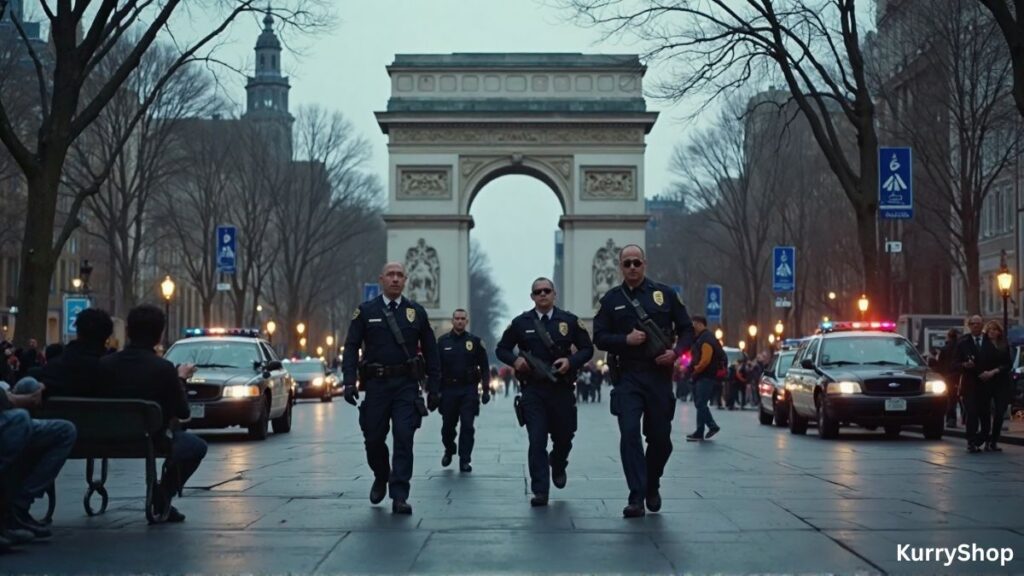
New York City — The NYPD has taken a dramatic step toward restoring safety in one of Manhattan’s most iconic public spaces, Washington Square Park, deploying dozens of officers around the clock in a sweeping crackdown on drug dealing and substance use in the park. The move comes after months of complaints from Greenwich Village residents and business owners that the area has become a hotbed of crime and aggressive behavior.
For years, Washington Square Park has been known as a cultural hub — a gathering place for students, artists, and musicians. But locals say its reputation has been overshadowed by rising drug activity and public disorder. The latest NYPD operation aims to change that image “for good,” according to law enforcement officials.
Exclusive Offer for Our Readers!
Discover an amazing deal available only for our audience. Don’t miss out—act now!
A Park Under Pressure
Concerns over public safety have escalated throughout 2024 and 2025. Residents reported seeing open-air drug markets just steps away from playgrounds and university buildings. Some described the park as “unrecognizable” at night, with frequent fights and harassment of passersby.
The police presence has now shifted to what one official called a “zero-tolerance” strategy.
Dozens of Officers, 24 Hours a Day
The effort involves deploying large teams of uniformed officers, sometimes accompanied by specialized units. Law enforcement sources say the operation is designed to show a continuous and visible police force, making it clear that criminal behavior will not be tolerated. Officers are patrolling the fountain area, the pathways near the iconic Washington Square Arch, and exits leading into the streets of Greenwich Village.
City officials say the goal is not just enforcement but reclaiming the park as a safe, inclusive space. “Families and students deserve to enjoy this park without fear,” an NYPD spokesperson said.
Community Response: Relief and Skepticism
Public reaction so far is mixed.
Some residents feel relieved. One local business owner remarked that in recent weeks, “the park already feels different — calmer.” Regular joggers and dog-walkers say they see fewer aggressive encounters and drug deals in the open.
But others are concerned about the long-term impact of heavy policing on a neighborhood famous for activism and artistic freedom.
Students from NYU, whose campus surrounds the park, expressed worry that the operation might affect innocent people who simply gather to socialize or perform music — traditions that have defined the park for decades.
Civil liberties groups caution that the tactics must avoid “criminalizing homelessness.” They argue that struggling individuals need services, not jail cells.
Exclusive Offer for Our Readers!
Discover an amazing deal available only for our audience. Don’t miss out—act now!
Officials: The Strategy Is Working
Local leaders defending the move say results are already visible. Noise complaints have dropped. Public drug use appears less common during both daytime and evening hours. Patrols are interacting more with residents, encouraging them to report suspicious activity.
“People are coming back to the park — that’s the biggest sign,” one officer said while standing near the fountain.
A Bigger Battle in NYC’s Parks
The crackdown is part of a broader citywide effort to fight drug activity in public spaces. In recent years, parks across several boroughs — including parts of the Bronx, Queens, and Lower Manhattan — have seen an increase in narcotics distribution.
Experts say several factors fueled the rise:
- Economic instability
- Addiction linked to opioids and fentanyl
- Short-staffed social programs
- Criminal groups shifting street-level operations
Officials fear that without intervention, parks can become informal drug zones, discouraging tourism and damaging neighborhoods.
Support Services Coming Next?
Advocates for the unhoused argue that permanent change requires pairing policing with:
- Addiction outreach services
- Mobile health units
- Mental-health crisis response
- Affordable housing expansion
Without these tools, they warn, the problem will “simply move somewhere else.”
City Hall says social-service teams will be involved in the next phase — but critics want details and timelines, not promises.
Exclusive Offer for Our Readers!
Discover an amazing deal available only for our audience. Don’t miss out—act now!
Balancing Culture and Safety
Washington Square Park has always been more than a green space — it is a symbol of New York City’s identity. From the Beat poets to LGBTQ+ rights demonstrations to pandemic-era celebrations, it remains a place where voices gather and culture thrives.
The challenge facing the NYPD and the community now is finding a balance:
- Safe but not silent
- Protected but not policed into conformity
- Open but not overrun
Some fear New York could lose a piece of its soul along with its street activity.
What Happens Next?
Authorities say the 24/7 deployment will continue indefinitely — at least until crime metrics show a significant improvement. Residents hope the results hold. Visitors are already returning in larger numbers as the winter holiday season approaches.
But the long-term success of the operation will depend on whether safety and culture can coexist — and whether the city can address the root causes driving people to the park’s darker corners.


I don’t think the title of your article matches the content lol. Just kidding, mainly because I had some doubts after reading the article.