
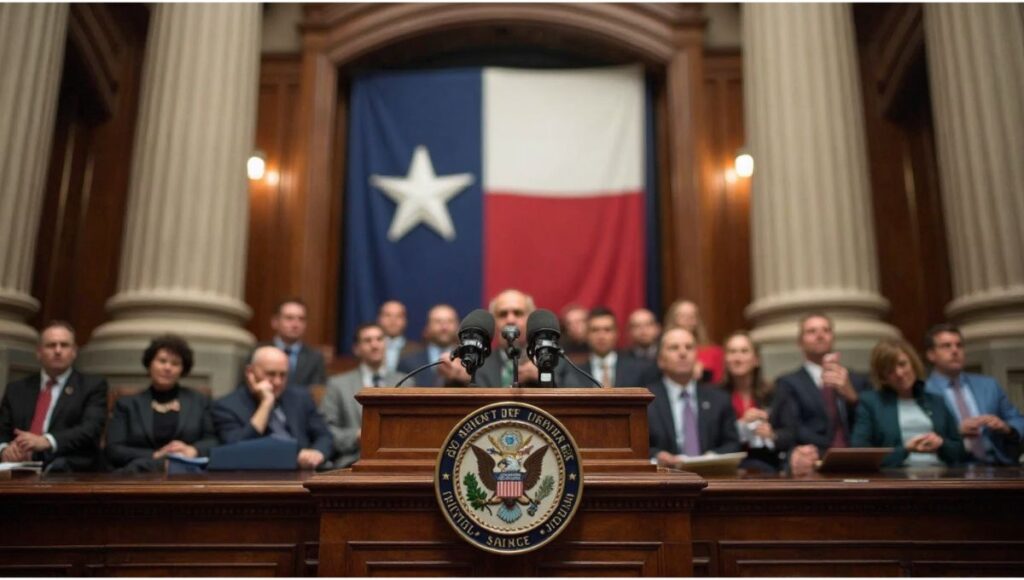
Texas lawmakers wrapped up a dramatic special legislative session this week, closing the books on a period that delivered sweeping policy changes, political fights, and long-awaited conservative victories. From voting reforms and abortion pill restrictions to transgender restroom rules and flood safety, the second special session of 2025 will have lasting impacts across the Lone Star State.
A Contentious Special Session Comes to a Close
On Wednesday, the Texas Legislature adjourned sine die, ending weeks of debate and marathon hearings. The session was called by Governor Greg Abbott to address urgent policy issues after the regular session failed to resolve them. Lawmakers passed new congressional maps, advanced conservative social legislation, and approved disaster relief for flood-stricken regions.
While Republican leaders celebrated the outcomes as victories for “Texas values,” Democrats and advocacy groups warned that many of the bills will spark lawsuits, harm vulnerable communities, and deepen political polarization across the state.
Transgender “Bathroom Bill” Heads to Governor’s Desk
One of the most controversial measures of the session was a revived version of the so-called “bathroom bill.” The legislation requires transgender individuals to use public restrooms that correspond to the sex listed on their original birth certificates, not their gender identity.
Supporters argue the bill is about privacy and safety, while critics denounce it as discriminatory and harmful to LGBTQ Texans. Similar proposals failed repeatedly in previous years, but this time the measure advanced with strong support from GOP leadership. Governor Abbott is expected to sign the bill in the coming days, setting the stage for potential court challenges.
Abortion Pill Lawsuits: A New Legal Battlefield
Another major outcome of the session is a new law that allows private citizens to sue manufacturers and distributors of abortion pills, even if those companies operate outside Texas. Plaintiffs can seek damages of up to $100,000 per violation, echoing the state’s earlier “bounty” law that enabled lawsuits against abortion providers.
Supporters say the measure strengthens Texas’s pro-life stance and deters the spread of abortion medication. Opponents argue the law is unconstitutional, will flood courts with frivolous lawsuits, and could cut off access to safe reproductive care. National legal experts predict challenges will quickly move through federal courts.
Voting System Changes: A Return to Paper Ballots
Election integrity was another focus of the special session. Lawmakers approved a bill requiring several counties, including Collin, Williamson, and Bastrop, to transition away from touchscreen voting machines and adopt paper ballots instead.
Republicans say paper ballots will increase transparency and reduce the risk of fraud. Democrats counter that the shift will create confusion, increase costs for local governments, and discourage voter turnout. With midterm elections approaching in 2026, the move could significantly reshape how Texans cast and count their votes.
Flood Relief and Infrastructure Funding
Beyond the hot-button cultural battles, the session also addressed urgent practical needs. The Legislature approved new funding for flood safety and disaster relief, allocating resources to rebuild communities damaged by recent storms and to strengthen future infrastructure.
Local officials across Texas welcomed the move, though some criticized the funding as insufficient given the scale of damage. For families and businesses still recovering, however, the legislation offers a vital lifeline.
Political Fallout and What Comes Next
The end of the special session doesn’t mean the debates are over. Lawsuits are almost certain to follow both the abortion pill and bathroom bills, while voting rights groups are already preparing challenges to the paper ballot mandate. Democrats plan to use these issues as rallying points heading into the 2026 elections, while Republicans are likely to frame the session as proof of their commitment to conservative priorities.
For Texans, the impacts will be felt in daily life—from how students use restrooms at school to how voters cast their ballots in the next election. Nationally, the state once again stands at the forefront of America’s culture wars, setting precedents that other conservative states may soon follow.
The 2025 special session underscored Texas’s role as a political battleground where high-stakes debates over identity, health care, and democracy play out with national implications. With Governor Abbott poised to sign key bills into law, the coming months will reveal how these measures reshape life in the state—and how courts, voters, and communities respond.
📚 Sources
- Texas lawmakers approve letting private citizens 🔗 apnews.com
- Texas House passes anti-trans bathroom bill 🔗 chron.com
- Texas Legislature passes paper ballot mandate 🔗 texastribune.org