

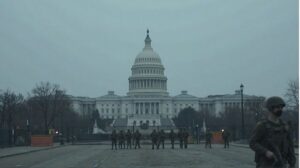
Washington, D.C. — The nation’s capital is currently at the epicenter of a political showdown, as sweeping federal budget cuts, a protracted government shutdown, and legal conflicts over force deployment strain the balance between federal power and local autonomy. With budget reductions targeting homeland security and disputes over troop presence heating up, Washington offers a sharp lens on how politics are reshaping national priorities in real time.
Exclusive Offer for Our Readers!
Discover an amazing deal available only for our audience. Don’t miss out—act now!
Deep Cuts to D.C. Security Funding
In a controversial move, the Trump administration announced slashes of over $40 million from homeland security grants allocated to the Washington, D.C. metropolitan area. These funds, historically used to support emergency response, anti-terrorism operations, and first responder readiness, have been reduced by nearly 90%.
Local officials decried the cuts, warning that they jeopardize the city’s preparedness for large-scale events and national threats, especially in a federal district that hosts some of the country’s most sensitive institutions. The District of Columbia, along with nearby Maryland and Virginia jurisdictions, filed a lawsuit in federal court contending that the funding cuts are politically motivated, disproportionately targeting “sanctuary” or Democratic-led areas.
A judge has temporarily blocked the implementation of the cuts pending further litigation—offering a pause in what may become a renegotiation of the balance between federal oversight and local security.
Government Shutdown & Mass Layoffs Start
Washington is also reeling from the effects of the ongoing federal government shutdown, now entering its second week. Tens of thousands of federal workers have been furloughed, and mass firings—or reductions in force (RIFs)—have begun to take effect.
The White House’s budget office confirmed that RIFs are underway, intensifying pressure on Congress to pass emergency funding. Meanwhile, President Trump has threatened sweeping tariff hikes on Chinese goods, stirring volatility in economic and diplomatic circles.
A Reuters/Ipsos poll reveals that 67% of Americans blame Republicans for the shutdown, while 63% assign similar blame to Democrats. The notion that both parties share responsibility underlines growing public frustration with the stalemate.
Exclusive Offer for Our Readers!
Discover an amazing deal available only for our audience. Don’t miss out—act now!
Legal Tussle Over National Guard Deployment
One of the most contentious flashpoints is the deployment of the National Guard in Washington, D.C. In August 2025, President Trump invoked an executive order—EO 14333—declaring a crime emergency in the capital and federalizing the city’s police force, placing it under direct federal control.
This marked the first use ever of Section 740 of the D.C. Home Rule Act, which permits the President to assume control over local policing when he deems emergency conditions exist. The administration declared rampant crime as justification, despite city statistics showing that D.C. was enjoying its lowest violent crime rates in 30 years.
The federal maneuver was paired with deployment of nearly 2,000 National Guard troops, many placed in tourist zones rather than high-crime neighborhoods—raising accusations of theatrics over substance.
Local leaders responded with legal action. The D.C. Attorney General filed suit challenging the deployment’s constitutionality and the executive’s authority to override local governance. Twenty-three Republican-led states endorsed the federal stance, while 22 Democratic-led states opposed it, framing the conflict as a test of federal overreach vs. local autonomy.
Political Underpinnings and Motivations
The move to centralize policing in Washington is seen by many analysts as a politically strategic gambit. By placing the capital under tighter executive control, the administration seeks both symbolic and operational influence over the seat of government. Critics argue it sets a dangerous precedent for federal intervention in local jurisdictions.
Moreover, the timing of the security cuts, shutdown, and policing takeover raises questions of coordination. Some Democrats accuse the administration of punishing D.C.—a reliably Democratic jurisdiction—for defiance on local policy and governance.
Supporters argue that the move responds to rising pressure to tighten control over security in the capital and combat crime. Federal officials assert that the D.C. deployment and funding realignment are matters of national importance that warrant extraordinary executive power.
Risks, Fallout & What’s at Stake
- Undermined local authority: If the courts uphold the federal takeover, other cities may face similar interventions, eroding the principle of local control.
- Security gaps: D.C.’s reliance on federal funding for emergency preparedness means cuts may leave the city vulnerable to crises.
- Political backlash: Residents and local politicians may push back harshly, seeing these as power grabs rather than public safety measures.
- Legal precedent: The case could become constitutional reference for federal authority over municipalities nationwide.
As arguments play out in courts and Congress, Washington stands as a test case of governance tension in America’s evolving political climate.
Exclusive Offer for Our Readers!
Discover an amazing deal available only for our audience. Don’t miss out—act now!
Sources:
- washington post – the balance between federal oversight and local security.
- wikipedia – placing it under direct federal control.
- Ap news – federal intervention in local jurisdictions.



Can you be more specific about the content of your article? After reading it, I still have some doubts. Hope you can help me.
Your article helped me a lot, is there any more related content? Thanks! https://www.binance.info/vi/register?ref=MFN0EVO1
I don’t think the title of your article matches the content lol. Just kidding, mainly because I had some doubts after reading the article.