
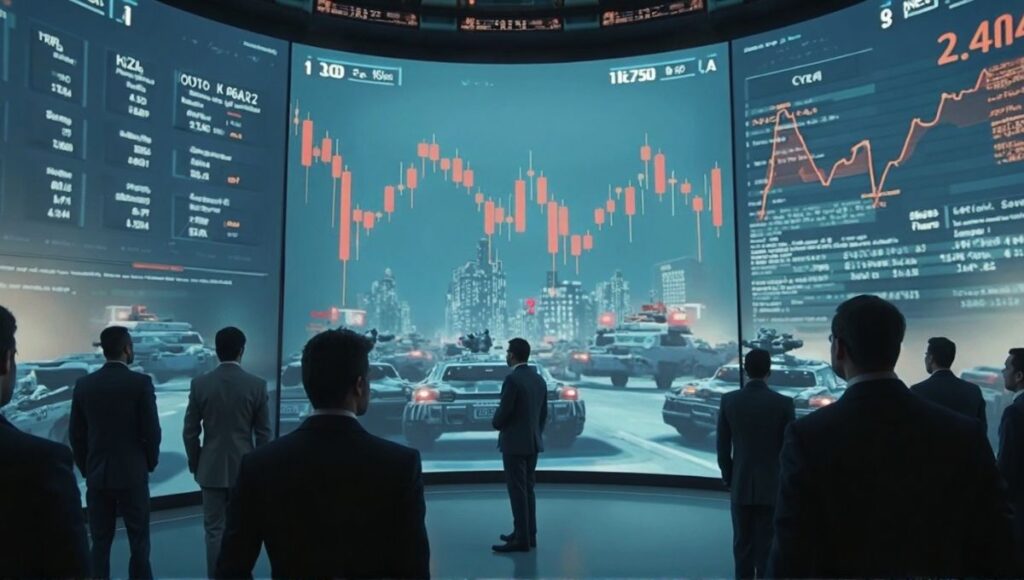
The financial heartbeat of Europe skipped today, and the tremor wasn’t caused by war—but by the whisper of peace.
In trading floors from Frankfurt to Paris, defense giants that had soared during the heat of the Ukraine conflict suddenly lost altitude. Investors who once viewed tanks and missiles as the golden ticket to security are now facing a different question: What happens to the war economy when peace starts knocking?
The Rise Before the Fall
For months, Europe’s defense industry thrived on one narrative: conflict fuels contracts. Nations, haunted by Russia’s aggression and pressured by Washington’s calls for burden-sharing, rushed to stockpile weapons. Profits swelled, stock charts climbed, and CEOs spoke with the swagger of inevitability.
But markets are fickle. They trade not just on what is—but on what might be. And right now, what “might be” is a negotiated peace, one that shifts the balance of military spending and tilts the spotlight away from European suppliers.
America’s Shadow on the Horizon
Adding to the drama, Ukraine’s latest security pledges point heavily toward U.S. defense manufacturers. From F-16 fighters to Patriot systems, Washington’s arsenal could dominate the future rebuild. European firms, once braced for years of steady contracts, suddenly look vulnerable—overshadowed by American power, innovation, and geopolitical leverage.
It’s a subtle reminder: in moments of peace, markets reveal who really holds the keys to influence. And more often than not, those keys are stamped “Made in the USA.”
The Bigger Picture: Peace as a Market Disruptor
Here’s the paradox—peace, the outcome every diplomat claims to crave, rattles industries that built their windfalls on conflict. Defense stocks aren’t just numbers; they’re symbols of how economies intertwine with geopolitics. When cannons fall silent, the sound echoes all the way to Wall Street and the DAX.
So is this a crash or merely a correction? Analysts argue the slump may be temporary, a sharp inhale before governments reassert their need for deterrence. After all, even peace requires an army to defend it. But the psychological shift is undeniable—war may no longer feel like an infinite market.
Final Word: The Fragility of Profit in an Age of Peace
Europe’s defense titans are learning the hard way: markets don’t reward certainty, they reward adaptation. A war-driven boom is fragile, and when the prospect of peace rises, it can shatter just as quickly as it was built.
Tonight, traders close their screens with one haunting thought—if peace is coming, who pays the price?

Thank you for your sharing. I am worried that I lack creative ideas. It is your article that makes me full of hope. Thank you. But, I have a question, can you help me?