
A Whisper Turns into a Roar
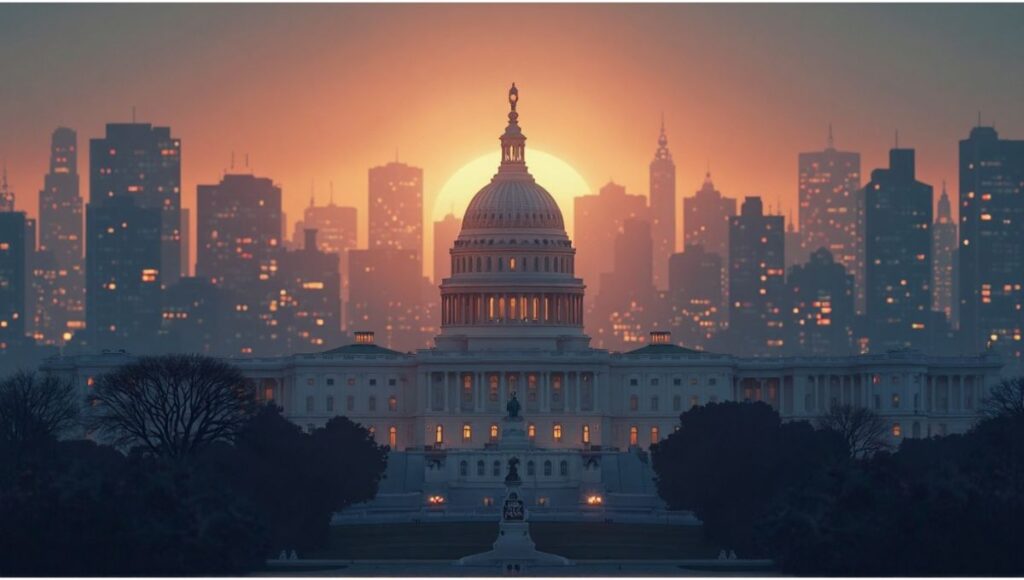
The sun had barely risen over Washington when a rumor began to circulate through the halls of power: the party that had spent decades preaching the sanctity of free markets was preparing to seize the steering wheel of the economy. In hushed conversations, aides traded whispers, lobbyists paused mid-latte, and investors scanned their screens with unease. Something was shifting—something that had long been considered unthinkable.
The Creed of Free Markets Shattered
For half a century, the Republican creed was simple: government should step aside and let enterprise flourish. Factories would rise and fall, fortunes would be made and lost, and the invisible hand would correct whatever storms might come. But now, in a sudden pivot, the same party that once scorned government intervention was sketching blueprints for a new era—one in which the state did not merely referee the market but claimed a seat at the table.
The Slow Drumbeat of Change
The turning point did not come with a thunderclap but with a slow, deliberate drumbeat. A tech giant faltered, a semiconductor supply chain threatened to unravel, and the whispers of vulnerability grew into a chorus. Patriotic rhetoric fused with economic anxiety: could America afford to let strategic industries drift into uncertainty? Or was it time to pick up the tools of intervention once reserved for rivals abroad?
Behind Closed Doors: A Radical Blueprint
Behind closed doors, a handful of lawmakers drafted measures that would have once been denounced as heresy. **State equity in private firms. Federal directives in boardrooms. Direct control over supply chains** once left to global competition. To many, it felt like a screenplay from an alternate history—one in which the party of Reagan had wandered into the script of FDR.
The Battle Inside the Party
Not everyone was convinced. In smoke-filled committee rooms, libertarians warned of betrayal, lobbyists bristled at the idea of bureaucrats sharing their profits, and old-guard Republicans muttered about ghosts of socialism past. Yet outside the Beltway, a different story was taking hold. Voters—especially those whose jobs had been hollowed out by outsourcing—saw the promise of a government willing to defend not just the flag but the factory floor.
America’s New Economic Drama
And so, a new chapter began. A party once defined by its faith in “laissez-faire” economics now courted intervention with a fervor that bordered on zeal. Whether this transformation marks the birth of a sturdier republic or the erosion of its free-market soul is a question only history will answer. For now, the stage is set, the actors are in place, and the audience waits for the curtain to rise on America’s most unlikely political drama.



Thanks for sharing. I read many of your blog posts, cool, your blog is very good.
Thank you for your sharing. I am worried that I lack creative ideas. It is your article that makes me full of hope. Thank you. But, I have a question, can you help me?
Can you be more specific about the content of your article? After reading it, I still have some doubts. Hope you can help me.
Can you be more specific about the content of your article? After reading it, I still have some doubts. Hope you can help me.
Thank you for your sharing. I am worried that I lack creative ideas. It is your article that makes me full of hope. Thank you. But, I have a question, can you help me?
Your article helped me a lot, is there any more related content? Thanks!